Chocolate Quality & Buyer Specification Guide
What "dark," "milk," "white" and "couverture" actually mean as defined cocoa-solids thresholds (not marketing terms), what tempering and storage have to do with quality, and an honest look at who actually makes and supplies finished chocolate in Tanzania. This page covers the finished product only -- for the raw cacao bean, fermentation, and Tanzania's growing regions, see our Cacao.tz Quality & Buyer Specification Guide.
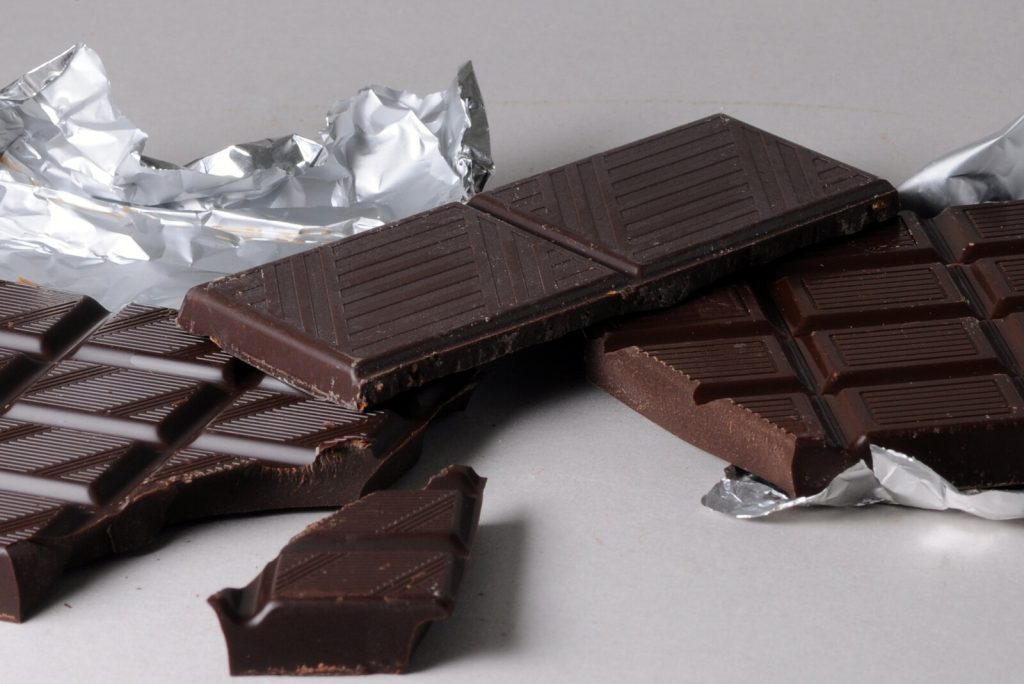

What "chocolate" legally means -- Codex and EU thresholds
Unlike "Grade I cashew" or "Grade A vanilla," the basic category names for chocolate -- dark, milk, white, couverture -- are defined by minimum composition thresholds in law and international standard, not by a trade convention alone. Two sources define these thresholds in overlapping but not always identical terms: the international CODEX STAN 87-1981 (Rev. 1-2003), Standard for Chocolate and Chocolate Products, and the EU's Directive 2000/36/EC (consolidated text as last amended 2013), which is the one most buyers and label-readers actually encounter in practice given how much chocolate reaching Tanzania originates from or transits through markets that follow EU-style labelling.
| Category | Total dry cocoa solids | Cocoa butter | Dry non-fat cocoa solids | Milk solids |
|---|---|---|---|---|
| Chocolate ("dark"/plain -- EU) | ≥35% | ≥18% | ≥14% | — |
| Chocolate (CODEX STAN 87) | ≥35% | ≥18% | ≥14% | — |
| Sweet chocolate (CODEX only) | ≥30% | ≥18% | ≥12% | — |
| Milk chocolate (EU) | ≥25% | — | ≥2.5% | ≥14% (incl. ≥3.5% milk fat) |
| Milk chocolate (CODEX) | ≥25% | — | ≥2.5% | 12-14% (jurisdiction-set within band) |
| Family milk chocolate (EU) | ≥20% | — | — | ≥20% |
| White chocolate (EU & CODEX, closely matching) | — | ≥20% | — | ≥14% (incl. 2.5-3.5% milk fat) |
| Couverture chocolate (EU & CODEX, matching) | ≥35% | ≥31% | ≥2.5% | — |
Two things worth flagging precisely: first, neither Codex nor the EU directive use the word "dark" as the formal category name -- the base category is simply "Chocolate" (EU) or "Chocolate" alongside a separate lower-threshold "Sweet Chocolate" tier (Codex only, no EU equivalent we could confirm); "dark chocolate" is colloquial/marketing shorthand for this category, the same kind of precision gap the cashew guide flags for "W320" vs a named standard. Second, we could not independently open the primary CODEX STAN 87 PDF as extractable text in our tooling -- the Codex figures above are reported via converging secondary summaries rather than a primary-document read, whereas the EU figures were confirmed directly from the consolidated EUR-Lex text. Treat the Codex column with correspondingly lower confidence until someone reads the primary PDF directly.
Sources: Directive 2000/36/EC, consolidated text (2013-11-18), Annex I; CODEX STAN 87-1981, Rev. 1-2003 (secondary-summary sourced, not independently read from the primary PDF -- see caveat above).
Couverture & cacao-percentage marketing
Couverture is not a quality tier above "dark chocolate" in some vague sense -- it is a specific compositional category (see table above: ≥31% cocoa butter, well above the ≥18% baseline) formulated with extra cocoa butter specifically so it flows more thinly when melted, which matters for professional moulding, enrobing and dipping rather than for eating out of hand. A couverture and a standard dark bar can carry the same "70% cacao" marketing claim while being formulated for different jobs.
The "70%," "85%" etc. figures seen on retail bars refer to total cocoa solids (cocoa butter plus non-fat cocoa solids combined) as a percentage of the bar, not a quality score and not directly comparable to the Grade I/II cocoa-bean defect table on our Cacao.tz guide -- a higher percentage means less sugar (and, for milk chocolate, less milk solids) in the formulation, not necessarily better-fermented or better-sourced beans. Treat a cacao-percentage claim and a quality/provenance claim as two separate things a specification should address separately.
Tempering & conching -- what separates well-made chocolate from poorly made chocolate of the same recipe
Conching is the prolonged mixing/shearing of chocolate paste that reduces particle size and drives off unwanted volatile acids, smoothing texture and rounding flavour; under-conched chocolate reads as grainy or harsh regardless of how good the underlying beans were.
Tempering is the controlled heating/cooling sequence used to encourage cocoa butter to crystallise in one specific, stable crystal form (commonly labelled "Form V" / β-form in the confectionery-science literature) rather than the softer, unstable forms that form on uncontrolled cooling. A typical tempering sequence heats chocolate above roughly 31-32°C to melt unstable crystal forms, then cools and reintroduces (seeds) a small proportion of stable-form crystals as nuclei before final moulding. Properly tempered chocolate shows a glossy surface, a clean audible snap, and a smooth melt; poorly tempered chocolate is dull, soft, and crumbly, and is also the condition that makes the bloom described below more likely and more visible.
General confectionery-science sourcing (Musim Mas technical blog; Wikipedia, "Tempered chocolate," citing standard food-science descriptions of cocoa butter polymorphism) -- industry-general knowledge, not Tanzania-specific, and not independently verified against a peer-reviewed primary source for the specific temperature figures quoted.
Storage, shelf life & bloom
Two distinct, commonly-confused surface defects are both called "bloom":
- Fat bloom -- warm-temperature exposure softens and separates cocoa butter, which migrates to the surface and recrystallises as a dull grey/white film. Driven by heat and, separately, by poor tempering in manufacture.
- Sugar bloom -- damp conditions, high relative humidity, or condensation from storage-temperature swings dissolve surface sugar, which then recrystallises as a rougher white film on drying.
Commonly cited storage guidance is roughly 16-21°C (60-70°F) with relative humidity around 50-60%, away from direct light and strong odours. Bloom is a cosmetic and, for fat bloom, textural defect -- it does not by itself make chocolate unsafe to eat -- but fat bloom in particular is also associated with softening and a grainy mouthfeel, so it is a legitimate quality rejection reason for a buyer even though it is not a food-safety one. Tanzania's tropical/equatorial climate and uneven cold-chain infrastructure make storage-temperature control a genuinely higher practical risk for bloom here than in a temperate-market context -- worth a specific question to any Tanzania-based supplier or distributor about their storage conditions, rather than assuming generic shelf-life guidance written for a temperate market applies unchanged.
Packaging
Standard retail packaging is foil (or metallised film) plus an outer paper/printed wrap -- a two-layer system, not a single standard dictated by a regulator. The foil/metallised layer does the functional work: it is close to impermeable to water vapour and oxygen, blocks light (UV/visible light degrades cocoa butter's crystal structure and accelerates fat bloom), and -- in both directions -- blocks transfer of volatile odours, which matters because chocolate readily absorbs ambient smells (and can transmit its own) through unprotected packaging. We did not find a codified numeric moisture-vapour-transmission-rate standard specific to chocolate bar wrapping (as opposed to general food-packaging barrier-film specifications) -- treat any such figure quoted by a packaging supplier as a supplier specification, not a chocolate-specific regulatory requirement.
Tanzania-specific: a thin manufacturing base behind a real import market
Tanzania grows cacao but does not, in any real industrial sense, make chocolate yet. A small number of real, named businesses are trying to close that gap:
- Munny Chocolate -- a currently-operating bean-to-bar manufacturer based in Kigamboni, Dar es Salaam (founded 2022), sourcing cocoa from Tanga, Mbeya and Morogoro growing areas and producing dark and milk bars, cocoa butter and cocoa powder, plus a domestic corporate-gifting line.
- Chocolate Mamas (registered as Gourmet Tanzania Chocolate Ltd.) -- founded 2012, built bars from Tanzanian cacao and local sugar, sold through retail outlets in Dar es Salaam, Arusha and Zanzibar aimed at tourists, expatriates and higher-income local buyers. Press coverage is thin after roughly 2019-2020; we treat its current operating status as unconfirmed rather than assumed-active.
- Zanzibar Craft Chocolates -- a bean-to-bar social enterprise that sources fine-flavour cacao from Kyela (southern mainland Tanzania) and manufactures chocolate on Zanzibar, with a stated focus on supporting smallholder women farmers at origin.
Kokoa Kamili is not a chocolate maker -- it is the Kilombero Valley centralised fermentary described on our Cacao.tz guide. It sells fermented, dried beans, not bars; the actual roasting, grinding, conching, tempering and bar production for its beans happens almost entirely outside Tanzania, at craft makers such as Dandelion Chocolate (San Francisco), Omnom (Iceland), Raaka, Letterpress and Chocolate Naive. That is why Tanzania shows up on a number of premium single-origin bar wrappers internationally despite having almost no domestic bar-production industry of its own yet. Zanzibar itself grows no cacao -- its "chocolate" presence is a tourism-and-retail layer (the two businesses above, plus the Zanzibar Chocolate, Coffee & Chai Museum at the historic Jafferji House), not a production origin.
The trade data confirms the asymmetry. In 2024, Tanzania imported roughly 2,147 tonnes of chocolate and cocoa preparations (HS 1806) worth about USD 5.07 million CIF, while exporting only about 9.98 tonnes worth roughly USD 4,842 FOB -- not a trade deficit in the ordinary sense, but the near-total absence of an export side. South Africa supplied about 63.5% of 2024 import value on its own (the United Kingdom and Kenya add a further 9.2% and 5.8%); none of Tanzania's top chocolate-import origins are themselves cocoa-growing countries -- they are regional manufacturing/FMCG distribution hubs, meaning the practical supply chain for a Tanzanian buyer usually runs through a regional distributor, not a direct line to a cacao-growing country or a European factory. Within that HS 1806 heading, roughly 1,165 tonnes in 2024 fell under the catch-all "other preparations" subheading at a low implied unit value (~USD 1.38/kg) -- consistent with significant volume being bulk/ingredient-grade material (bakery, confectionery and beverage inputs) rather than branded retail bars, though we would not claim the entire catch-all subheading is industrial feedstock on that price signal alone.
No harvest calendar applies to this page -- chocolate is manufactured, not grown, so there is deliberately no harvest-seasonality section here. If a specific input-availability or supply-cycle pattern tied to raw cacao matters to your sourcing (e.g. freshness of a specific fermentary's current-season lot), that belongs on our Cacao.tz guide, including the honest harvest-timing gap documented there -- we have not found Tanzania-specific evidence that finished-chocolate availability tracks the cacao harvest in any documented way distinct from ordinary finished-goods inventory and import-shipment timing.
Sources: our own Chocolate.tz reporting -- "Tanzania's Bean-to-Bar Makers: Who Is Actually Making Chocolate Here", "Kokoa Kamili's Beans, Other People's Bars" and "Chocolate in Zanzibar: What's Actually There" (companies verified via self-reported company sources, VOA News, The Chocolate Journalist, The Chocolate Professor, and press coverage as individually cited on those pages); trade figures via "Who Supplies Tanzania's Chocolate: An Import and Distribution Guide", itself sourced to UN Comtrade public-preview data, HS 1806, reporter Tanzania, 2022-2024, retrieved 8 October 2026, rated reliability tier B (mirror/estimated data, not Tanzania's own customs submission -- see that article for the full caveat).
Buyer specification checklist
Worth putting in an RFQ or purchase order, whether or not every field applies to your order:
- Category & standard quoted -- e.g. "Milk chocolate per EU Directive 2000/36/EC" -- don't rely on "dark" or "70% cacao" alone; ask which composition standard and basis the percentage is calculated on.
- Total cocoa solids / cocoa butter / non-fat cocoa solids -- against the table above, especially if you need couverture specifically (its higher cocoa-butter minimum is functional, not just a marketing tier).
- Milk content & allergen status -- relevant for cross-contamination concerns between dark and milk lines on shared equipment, and for any allergen-labelling obligation in your destination market.
- Tempering/quality indicators on receipt -- gloss, snap, absence of bloom -- as an incoming-inspection checkpoint (see below).
- Storage & transport conditions -- temperature range maintained from factory to your receiving point, particularly relevant given Tanzania's climate (see storage section above).
- Packaging -- foil/metallised-film barrier confirmed, intact seal, no light damage or odour contamination.
- Shelf life / best-by basis -- and what storage conditions that date assumes.
- Certification requirements -- organic, fair-trade, Rainforest Alliance or other, if claimed, and who issued it.
- Origin of cocoa content, if claimed -- "Made with Tanzanian cacao" and "Made in Tanzania" are different claims; ask which one is actually being made, and by whom, given how few verified domestic manufacturers currently exist (see above).
- HS subheading -- 180610/180620/180631/180632/180690 carry different duty treatment in some markets; confirm which applies to your shipment rather than assuming the general HS 1806 heading is enough for customs purposes.
Sample & inspection guidance
- Gloss & snap -- a well-tempered bar should look glossy, not dull or streaky, and snap cleanly rather than bending or crumbling.
- Bloom -- visible grey/white surface film (fat bloom) or a rougher white film (sugar bloom) signals temperature or humidity abuse somewhere in storage/transport, even if the chocolate was well-made at the factory.
- Melting behaviour -- should melt smoothly near body temperature, not feel waxy or gritty, which can indicate under-conching or an off-spec fat blend.
- Aroma -- should smell clean and chocolatey, not rancid, soapy or musty; chocolate readily absorbs ambient odours through poor packaging, so an off-smell can originate in storage rather than manufacture.
- Packaging condition -- intact foil/film seal, no light exposure damage, correct labelling for the category actually being sold (see checklist above).
A visual/aroma sample check is a screening step, not a substitute for laboratory testing -- exact cocoa-solids percentage and compliance with a named composition standard require lab analysis to confirm, not inspection by eye. Our general Quality Inspection & Pre-Shipment Verification guide covers the wider pre-shipment inspection process that applies across commodities, including finished chocolate.
Full Tanzania chocolate profile
Who actually makes, imports and distributes chocolate in Tanzania, and the trade data behind it.
Read the full profile →Suppliers
Mababu Chocolate (Mababu Coco Beans)
Tanzanian tree-to-bar chocolate company sourcing cocoa from Mababu-area farmers in Kyela, the district producing roughly 80%…
Kokoa Kamili
Operates a central fermentary in Tanzania's Kilombero Valley (Mbingu village, Morogoro Region), buying wet cacao pods…

Munny Chocolate
Bean-to-bar manufacturer sourcing cocoa from Tanga, Mbeya and Morogoro. Produces dark and milk chocolate bars, cocoa…
Chocolate Mamas (Gourmet Tanzania Chocolate Ltd.)
Founded 2012 by Jaki Kweka; 100% African-input bars using Tanzanian beans and local sugar, historically sold…
Zanzibar Craft Chocolates
Bean-to-bar social enterprise sourcing fine-flavor cocoa from Kyela and manufacturing chocolate in Zanzibar, with a stated…
Last reviewed 8 October 2026. Sources cited inline above; see also Data Sources and Methodology for how we handle disagreeing figures and unverifiable claims.